Did you know that full literacy in Japan means mastering over 2,000 kanji characters, but most adults can get by with just 1,000? Kanji isn’t just a cluster of symbols; it’s the backbone of Japanese written communication. Whether you’re a global traveler, a language enthusiast, or someone seeking to deeply understand Japanese culture, understanding and mastering Japanese kanji opens doors to not only reading newspapers but also navigating public transportation, deciphering menus, and engaging with everyday Japanese life. In this article, we’ll provide an accessible and thorough roadmap for learners of all backgrounds to unlock the power of kanji—and, in turn, unlock new dimensions of success in the Japanese-speaking world.
Startling Facts: The Challenge and Rewards of Understanding and Mastering Japanese Kanji
The journey to understanding and mastering Japanese kanji is both challenging and rewarding. With thousands of kanji characters in use, many learners wonder how many they truly need to function in Japanese society. In reality, the average Japanese citizen actively uses around 1,000 kanji in daily life, though literacy and official sources often cite the Jōyō Kanji list, which includes 2,136 characters essential for reading newspapers, signage, and documents. Yet, the initial hurdle intimidates even the most motivated learners. The intricacy of kanji, with each character holding layers of meaning, readings, and historical context, can make the learning process seem overwhelming.
However, the rewards are immense. Successfully learning kanji provides profound access to authentic Japanese text, from literature to everyday signage. Mastery enables a deeper cultural understanding and practical independence, allowing learners to decipher train schedules, menus, official forms, and even participate in nuanced conversations. For those eager to learn Japanese kanji, every new character unlocked means increased confidence and connection to the heartbeat of Japanese society. With smart strategies and perseverance, anyone can break through the initial challenges to reap lifelong benefits.

Why Japanese Kanji Matters in Daily Life and Societal Functioning
Kanji is far more than an academic pursuit—it’s the pulse of Japanese communication. In daily routines, you’ll spot kanji everywhere: from street signs and shopfronts to food packaging and banking forms. Understanding these characters is vital for navigating public transit systems, reading safety notices, and even following instructions on everyday products. For anyone striving to read and write Japanese, kanji knowledge is a key to independence and full participation in Japanese society.
More than meeting practical needs, kanji characters encode cultural identity and nuance. Without them, a learner’s ability to interpret written text, distinguish between similar Japanese words, and appreciate literature is sharply limited. For schoolchildren, foundational kanji unlock all subjects; for adults, mastering kanji supports professional advancement and seamless integration. In essence, kanji ability bridges the gap between rote memorization and genuine fluency in the Japanese language.
Unconventional Stats: How Many Kanji Do You Really Need to Know?
While the Japanese writing system features over 50,000 kanji, only a fraction are routinely used. The government defines the Jōyō Kanji list of 2,136 characters as the standard for education and public communication. Schoolchildren study these over nine years, yet daily life often calls for fewer. To read signs, menus, and the bulk of everyday materials, mastery of about 1,000 core kanji is sufficient for most foreigners and even many native speakers. Newspapers and official content, however, lean on a larger set—typically the full Jōyō Kanji list.
Importantly, many Japanese texts rely on context, shared vocabulary, and the combination of kanji and kana (hiragana and katakana) to communicate meaning. This means learners can start functioning confidently in society well before reaching complete kanji mastery. The real trick lies in identifying which kanji are most essential for your personal goals—be it travel, business, or academic pursuits—and leveraging learning strategies to progressively bridge the gap.
What You’ll Learn in This Guide to Understanding and Mastering Japanese Kanji
- The different levels of kanji needed for fluency
- Strategies for learning kanji efficiently
- Comparison of native vs. foreigner kanji learning process
- Practical tips for using kanji in everyday Japanese life

Demystifying the Japanese Writing System: Foundations of Understanding and Mastering Japanese Kanji
The Structure of the Japanese Language: Hiragana, Katakana, and Kanji
The Japanese language elegantly blends three writing systems: hiragana, katakana, and kanji. Hiragana and katakana, collectively known as “kana,” are syllabaries that handle grammar, native Japanese words, and foreign loanwords. Kanji, by contrast, consists of logographic characters borrowed from Chinese, each embodying a specific meaning and sound.
Understanding this structure is crucial for learners. Typically, children master hiragana and katakana within their first year of schooling, giving them the tools to read basic Japanese and express pronunciation for any word—even when kanji is unfamiliar. Kanji, being more complex, is introduced gradually, with reading and writing skills expanding step by step. Mastery of all three scripts is central to fluency, enabling comprehension of everything from casual text messages to formal government documentation.
How Kanji Integrates with Japanese Text and Words
Kanji is interwoven with hiragana and katakana in everyday Japanese text, shaping the structure of sentences and words. In a typical Japanese sentence, kanji depict the core meaning—often nouns, roots of verbs, or key adjectives—while hiragana clarifies grammatical elements, and katakana highlights loanwords or adds emphasis. For instance, the Japanese word “食べる” (taberu, to eat) combines the kanji “食” for “eat” and the hiragana “べる” for the verb ending.
This blend enables concise communication and conveys subtle distinctions between words with similar pronunciation but different characters and meanings. Learning where and how to deploy kanji in combination with kana—alongside understanding kanji readings (onyomi and kunyomi)—is a pivotal aspect of both reading and writing Japanese fluently. As you learn kanji, recognizing these patterns facilitates comprehension and effective use of the language.

Levels of Learning Kanji: What You Need for Everyday Success in Japanese Society
| Level | Kanji Count | Abilities Unlocked | Examples of Use |
|---|---|---|---|
| Basic | 200–300 | Navigation, signs, menus | Train stations, food labeling |
| Intermediate | 1,000–1,200 | Newspapers, books, television | Jōyō Kanji for social independence |
| Advanced | 2,000–3,000+ | Literature, academic, official docs | Government forms, classic novels |
Basic Japanese Kanji for Navigating Daily Life
At the foundation, knowing 200–300 essential kanji is enough to read vital signs, basic restaurant menus, and transportation information. These characters are found on train maps, public bathrooms, ATMs, and food packages. Examples include 口 (mouth/entrance), 出 (exit), 行 (go), and 日 (day/sun). This set supports foreigners and early learners in gaining independence quickly, boosting confidence and reducing anxiety when traveling or interacting with public services.
Through focused practice and exposure, new learners can reach this level within a few months. Flashcards, signage walks, and immersion in basic Japanese texts are effective strategies. Remember, frequency matters: the most-used kanji appear everywhere in daily life, making their acquisition a natural first milestone on the journey to understanding and mastering Japanese kanji.
Intermediate Kanji: Reading Newspapers, Menus, and Station Signs
To read kanji in newspapers, scan menus, and comprehend TV subtitles, learners need a broader vocabulary—typically between 1,000 and 1,200 kanji. This “intermediate” tier covers the bulk of the Jōyō Kanji taught in Japanese schools and is sufficient for following the news, writing basic messages, and reading popular fiction.
Achieving this level requires dedication and consistent practice. Reading short articles, tackling children’s books, and reviewing graded kanji lists (like those posted by Tae Kim and other experts) can support a rapid ascent. With this set, even complex signage or government websites become accessible, unlocking deeper cultural and civic participation.
Advanced Kanji Mastery: Understanding Official Documents and Literature
Advanced proficiency in kanji—2,000 to 3,000+ characters—enables full literacy. This threshold is required for academic research, understanding contracts, reading literature, and participating in high-level professional contexts. Mastery at this stage means you can recognize historical, archaic, and domain-specific kanji, vital for lawyers, doctors, or translators.
Achieving advanced kanji knowledge often demands years of sustained effort and immersion in Japanese society. Even many native speakers continually refine their kanji and vocab knowledge into adulthood. For ambitious learners, the journey is never truly “finished”—but every step brings greater independence and connection to Japanese culture.

Understanding and Mastering Japanese Kanji as a Foreigner vs. Native Student
Learning Japanese Kanji in the Japanese School System: A Lifelong Process
For native Japanese children, learning kanji is an incremental journey that spans their entire academic career. Starting in first grade, students tackle a few basic characters, gradually expanding their repertoire each year. By the conclusion of junior high, every student should be familiar with the 1,026 kanji learned in primary school and the remaining characters needed to complete the full Jōyō Kanji set.
This slow, cumulative process—supported by consistent repetition, writing exercises, and integration across subjects—means students encounter each kanji repeatedly in authentic contexts. As a result, their kanji reading and writing abilities solidify gradually, with fluency emerging naturally as a part of broader Japanese language education. It’s a marathon, not a sprint, but one carefully tailored to a child’s developmental pace.
Challenges and Approaches for Foreigners Learning Kanji
Foreigners face a unique set of challenges when learning kanji. Without the immersive environment of a Japanese classroom and the formative repetition from an early age, adult learners must consciously structure their kanji knowledge acquisition. They often contend with the sheer number of kanji to memorize, unfamiliar complex stroke order, and the maze of multiple readings for the same character.
Effective approaches therefore harness modern technology—such as apps using spaced repetition systems—and focus on high-frequency kanji first. Reading children’s books, labeling household items, and practicing daily writing can also help anchor learning. While memorizing 2,000 kanji may seem intimidating, foreigners can compensate with deliberate strategies, digital aids, and regular immersion in real Japanese text.
“For most foreigners, memorizing over 2,000 kanji can seem daunting, but native speakers spend years mastering the same set through gradual repetition and immersion.” – Language Education Expert

Building Kanji Knowledge: Learning Strategies for Understanding and Mastering Japanese Kanji
Learning Kanji Through Stroke Order and Radicals
Correct stroke order is foundational for writing kanji accurately and efficiently. Every character is constructed from a series of ordered lines, and following proper technique enhances recall, legibility, and speed. Moreover, kanji are composed of smaller components known as radicals, which often provide hints about meaning or pronunciation. Mastering radicals enables learners to break down complex kanji, making memorization less daunting and allowing educated guesses when confronting new characters.
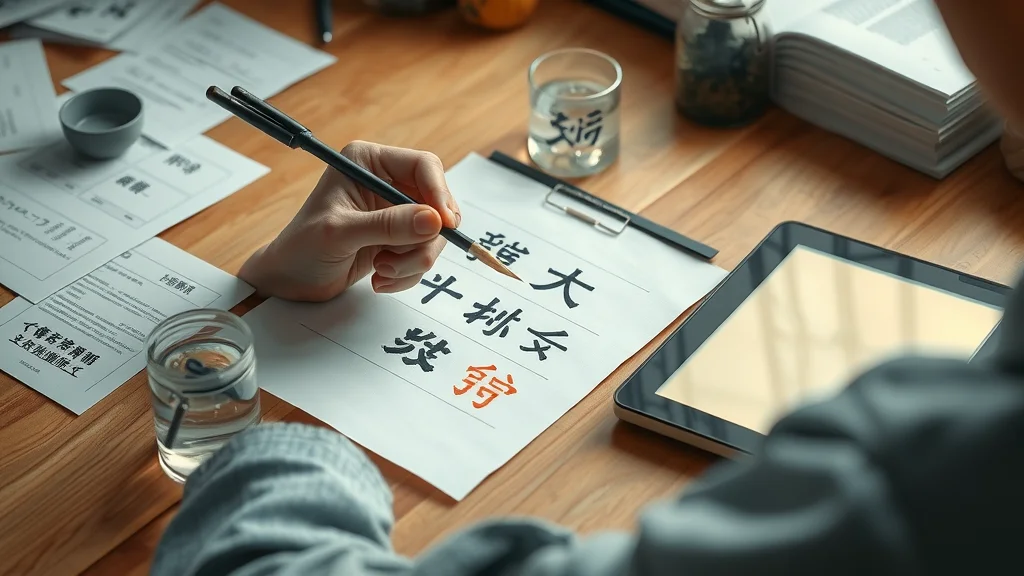
Regular writing practice—either with brush, pencil, or stylus—is vital. Tracing worksheets, practicing with kanji notebooks, and using calligraphy apps combine tactile learning with digital convenience. By deconstructing characters into their core radicals and ingraining the correct stroke flow, learners can build a lasting, flexible foundation for future kanji and vocab growth.
Spaced Repetition Systems: Boosting Long-Term Retention of Japanese Kanji
Spaced repetition systems (SRS) are a game-changer for anyone looking to learn Japanese kanji efficiently. These programs use intelligent algorithms to present kanji at optimal intervals—right before you’re likely to forget them—maximizing retention with minimal time investment. Popular kanji apps and websites (like Anki, Wanikani, or Memrise) let you customize your own flashcard decks, ensuring steady progress at your own pace.
In contrast to traditional rote memorization, which often leads to rapid forgetting, SRS helps cement information in long-term memory. For students keen to balance busy schedules with effective learning, integrating a repetition system into daily routines pays exponential dividends and accelerates progress toward kanji mastery.
Mnemonic Devices and Kanji Reading Practice for Better Recall
Mnemonics are memory aids that tie abstract kanji shapes or meanings to vivid visual imagery or stories. For instance, associating 木 (tree) with a simple sketch of a tree in your mind, or tying 食 (to eat) with a favorite dish, can make recall effortless. These techniques are especially useful when tackling characters with similar forms or obscure meanings.
Pairing mnemonics with frequent kanji reading practice—from simple sentences to full Japanese texts—strengthens recognition and usage. Reading aloud, copying sentences, and regularly revisiting learned characters in context cultivates not only memory, but also confidence and fluency in Japanese writing and conversation.
Traditional and Digital Kanji Learning Tools
Modern learners benefit from a wealth of kanji resources: classic textbooks, kanji dictionaries, flashcard sets, and innovative apps. Workbooks and calligraphy sets offer hands-on practice, while digital tools often add features like stroke order animations, instant lookup, and progress tracking. Combining traditional writing practice with digital review maximizes learning effectiveness and keeps motivation high.
Online kanji courses, reading groups, and social media communities further enhance the experience, offering accountability and support. The right mix of kanji learning tools caters to every style, from tactile learners needing pen and paper to tech-savvy students thriving on analytics and mobile devices.
Mastering Kanji Readings: Onyomi, Kunyomi, and Context in Japanese Language
The Concept of Multiple Kanji Readings
Every kanji character can be read in different ways, depending on context. The two primary readings are onyomi (derived from Chinese pronunciations) and kunyomi (native Japanese pronunciations). For example, the character 生 can be read as “sei” (onyomi, as in 先生 “sensei” for teacher) or “ikiru” (kunyomi, meaning “to live”).
Understanding which reading applies relies on recognizing word combinations and grammatical context. Compound words tend to use onyomi readings, while standalone words or those paired with hiragana may use kunyomi. Learning these rules and exceptions is key to confidently deciphering Japanese words and meanings in varied settings.
Practical Applications: Deciphering Japanese Words and Meanings
Reading real Japanese text requires the ability to flexibly switch between kanji readings. Dictionaries, reading apps, and extensive text practice enable learners to master these patterns over time. For practical use, pay special attention to kanji appearing in common words and phrases found on signage, menus, and news headlines.
In essence, kanji learning is inseparable from word learning. Each new kanji should be associated with actual vocabulary and sample sentences, solidifying not just recall, but also nuanced usage. This approach ensures that kanji knowledge translates into real-world communication skills—vital for anyone seeking to truly master Japanese kanji and vocabulary.
Overcoming Common Obstacles in Learning Japanese Kanji
Maintaining Motivation and Consistency in Learning Kanji
One of the greatest hurdles in learning kanji is staying motivated. Progress can feel slow, and the number of characters may seem insurmountable. Overcoming this requires practical goal-setting: break study into manageable steps, celebrate small wins, and track improvements. Building a daily routine—whether it’s 10 new kanji a week or regular reading practice—instills productive habits that compound over time.
Using digital trackers, learning groups, or language exchange partners can provide encouragement and friendly competition. Remember, consistency trumps cramming: regular, incremental learning creates permanent results and prevents burnout. Embrace mistakes as natural milestones on your journey to Japanese fluency.
Dealing with Kanji Similarities and Mistakes
Many kanji look similar at a glance, differing only by a few strokes or radical placements. It’s common for learners to mix up characters like 未 (not yet) and 末 (end), or 左 (left) and 右 (right). To tackle this, focus on learning the radicals and stroke order, use mnemonics to highlight unique features, and practice identifying kanji in real contexts instead of isolation.
Don’t fear errors—they are essential feedback. Regular self-quizzes, error logs, and revisiting mistaken kanji help root out confusion. Over time, these correction cycles sharpen recognition and deepen your overall mastery of the Japanese writing system.

Lists: Must-Know Japanese Kanji by Use Case
- Essential Kanji for Transportation: 駅 (station), 入口 (entrance), 出口 (exit), 電車 (train), 号 (number)
- Top Kanji for Food and Ingredients: 魚 (fish), 肉 (meat), 米 (rice), 野菜 (vegetable), 水 (water)
- Basic Japanese Kanji for Directions and Public Spaces: 右 (right), 左 (left), 上 (up), 下 (down), 市 (city), 所 (place)
- Common Kanji to Recognize in Newspapers: 新 (new), 社 (company), 政 (government), 経 (economy), 会 (meeting)

People Also Ask: Key Questions on Understanding and Mastering Japanese Kanji
How many kanji do I need to learn to read Japanese newspapers?
Answer: You’ll need to know the Jōyō Kanji list—the 2,136 standard characters used in daily Japanese writing and reading, especially for newspapers and official content.
What is the best method for memorizing Japanese kanji effectively?
Answer: The most effective methods combine spaced repetition systems, mnemonic associations, and consistent practice with real Japanese text and kanji reading exercises.
Is it possible to learn Japanese kanji without living in Japan?
Answer: Yes, with access to digital resources, online courses, and immersion through Japanese media, mastering kanji is possible outside Japan.
How do Japanese children learn kanji in school?
Answer: Japanese children learn kanji systematically, progressing from simple to complex characters year by year, aided by repetition and integration in all academic subjects.

Tables: Comparing Learning Methods and Kanji Progress Benchmarks
| Method | Approach | Retention Rate | Suitability |
|---|---|---|---|
| Spaced Repetition | Reviews kanji at optimal intervals | High (75–90%) | Long-term learning, busy schedules |
| Traditional Rote Learning | Repeated, massed practice | Moderate (40–60%) | Short-term memorization, exam prep |
| Kanji Count | Foreign Learner (Avg. Time) | Native Learner (School Year) |
|---|---|---|
| 100 | 3 months | End of Grade 1 |
| 1,000 | 1–2 years | End of Grade 6 |
| 2,136 (Jōyō) | 3–5 years | End of Grade 9 (Junior High) |
| 3,000+ | 5+ years (specialized study) | High school/university |
Expert Quotes: Insights on Understanding and Mastering Japanese Kanji
“The key to mastering Japanese kanji is persistent, structured exposure—with context always driving retention.” – Dr. Mika Tanaka, Linguist
“Learning kanji is not about memorizing shapes, but about discovering cultural stories behind each character.” – Professor Yuji Nakamura

Key Takeaways for Understanding and Mastering Japanese Kanji
- Set realistic goals for each kanji level
- Use a mix of repetition systems and reading practice
- Engage daily with Japanese text to reinforce learning
- Embrace mistakes as part of your kanji learning journey
FAQs: Everything You Need to Know About Understanding and Mastering Japanese Kanji
What are radicals and why are they important in learning kanji?
Radicals are the building blocks of kanji—small components that hint at meaning or pronunciation. Learning radicals helps break down complex characters into manageable parts, boosting both recall and the ability to decipher unfamiliar kanji. They’re essential for efficient learning and understanding the structure of the Japanese writing system.
How long does it realistically take to master Japanese kanji?
For most learners, reaching fluency with the Jōyō Kanji (2,136 characters) takes 3–5 years of consistent, structured study and practice. Progress depends on study habits, immersion, and daily exposure to Japanese text. Setting steady, incremental goals keeps you motivated on the long journey.
Should I learn kanji alongside hiragana and katakana?
Yes. Learning all three scripts concurrently helps you quickly recognize Japanese words, read simple texts, and build essential literacy skills. Kanji needs context from kana for meaning and grammar, so parallel study accelerates your overall Japanese language progress.
What are the most effective apps for spaced repetition of kanji?
Popular options include Anki, Wanikani, and Memrise, all of which use SRS algorithms for optimized kanji review. These apps track your progress, adjust intervals, and introduce new kanji at a personalized pace—making them valuable companions on your kanji learning journey.

Final Thoughts on Understanding and Mastering Japanese Kanji
Japanese kanji mastery is a cumulative adventure—focus on steady progress, use the right tools, and enjoy the rich culture unlocked with every character you learn!
Start Learning Japanese Kanji Today: Access the Best Tools and Resources
Ready to embark on your kanji journey? Explore SRS apps, kanji textbooks, and join supportive language communities. With daily practice and structured guidance, understanding and mastering Japanese kanji is within your reach—start today, and unlock a world of possibilities!
